
The Jet Stream: Earth's High-Altitude Highway in the Sky

Imagine a winding river, but instead of water, it's made of air, rushing around the globe at speeds that can top a speeding car. That's the jet stream, a fascinating phenomenon that plays a crucial role in shaping our weather, influencing everything from temperature fluctuations to storm tracks. Buckle up as we take a journey through the upper atmosphere to explore this invisible force that guides the dance of weather systems.
What is the Jet Stream?
The jet stream is a ribbon of fast-moving air, typically located in the upper troposphere, about 8-12 kilometers above Earth's surface. These winds can reach speeds of up to 250 miles per hour, zipping along like a celestial highway for weather systems. Think of it as the Earth's own personal airliner, transporting masses of air from west to east.
The Science Behind the Speed
But what makes the jet stream so fast? The secret lies in the temperature difference between air masses. Warm air rises, while cold air sinks. This contrast creates a pressure gradient, pushing the air in the jet stream to race eastward. The Coriolis force, a result of Earth's rotation, also plays a part, deflecting the winds further north or south as they travel.
Types of Jet Streams:
There are two main jet streams on Earth:
- The Polar Jet Stream: This powerhouse circles the globe near the 50-60°
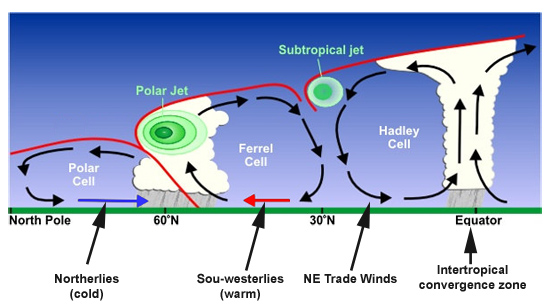
latitudes, separating frigid polar air from warmer temperate air. It's the strongest and most influential jet stream, dictating the paths of winter storms and influencing weather patterns across continents. - The Subtropical Jet Stream: Located around 30° latitude, this jet stream is less intense but still packs a punch. It separates tropical air from temperate air, affecting weather patterns in regions like the Mediterranean and southern United States.
Impact on Weather:
The jet stream's influence is far-reaching. It steers storms, influencing where it rains, snows, and shines. When the jet stream dips south, it can bring cold Arctic air further south, leading to frigid spells and snowstorms. Conversely, a northward bulge can usher in warm tropical air, causing heatwaves and droughts.
Climate Change and the Jet Stream:
A worrying aspect of climate change is its potential impact on the jet stream. Rising global temperatures are disrupting the temperature gradients that drive the jet stream, causing it to become more wavy and unpredictable. This can lead to more extreme weather events, such as stronger storms, prolonged heatwaves, and increased flooding.
Keeping an Eye on the Jet Stream:
Understanding and monitoring the jet stream is crucial for weather forecasting. Meteorologists utilize sophisticated computer models and real-time data to track its movements and predict its impact on weather patterns. This information helps communities prepare for potential extreme weather events and take necessary precautions.
The Jet Stream: A Force of Nature to Respect
The jet stream is more than just a fascinating atmospheric phenomenon; it's a powerful force that shapes our daily lives. From the chill of a winter blizzard to the heat of a summer scorcher, the jet stream's invisible hand guides the weather symphony. As we continue to learn more about this dynamic system, we gain a deeper appreciation for the delicate balance that governs our planet's climate.
Beyond Earth:
The jet stream isn't just an Earthly marvel. Other planets, like Jupiter and Saturn, also boast their own jet streams, driven by different forces like internal heat instead of solar radiation. Studying these extraterrestrial jet streams can further our understanding of atmospheric dynamics and their role in shaping planetary climates.
Conclusion:
The jet stream, Earth's high-altitude highway, is a captivating example of the intricate interplay between physical forces and weather patterns. By understanding its workings and respecting its power, we can better prepare for the challenges and opportunities it presents. So, the next time you look up at the sky, remember the invisible river of air rushing above, silently shaping the weather and climate that defines our world.
Further Resources:
- National Oceanic and Atmospheric Administration: https://www.noaa.gov/jetstream
- JetStream - An educational website about the jet stream: https://www.noaa.gov/jetstream/global/jet-stream
- NASA Earth Observatory: https://svs.gsfc.nasa.gov/10902/